Showing posts with label natural disaster. Show all posts

Wednesday, July 16, 2014

Holy Shit, the Oxygen Catastrophe

Actinomyces

Let's say your an obligate anaerobic organism, and it's roughly two and a half billion years ago. You're hanging out on Earth, and you've pretty much got the whole place on a string. The world is your oyster (except those don't exist yet, so the world is your...I don't know, other, smaller type of obligate anaerobe).

One day, a new guy shows up. Or several million new guys, because they're bacteria and they come in large groups. These new guys, the cyanobacteria, are pretty different. They go through this whole process of photosynthesis and end up producing oxygen, and it's kind of weird. You're not a fan. In fact, the stuff is toxic to you.
Rusting iron bolt
More like toxygen, amirite? Guys? Hehe. Classic.

Luckily for you, dissolved iron and organic matter ends up capturing most of the oxygen, so you continue on your merry way for another 200 million years or so. At that point, the oxygen sinks become fully saturated. That means oxygen starts becoming a part of the atmosphere. For you and all your friends, that's a bad thing. A very, very bad thing.

The "anaerobic" part of "obligate anaerobic" means "without air/oxygen." The "obligate" part means oxygen will straight murder you. Which is exactly what happened. The same event that started Earth's atmosphere down the path toward being breathable also caused one of the largest mass extinctions of all time. It was essentially an apocalypse. The only survivors were the culprits -- who passed on the trait of photosynthesis to future generations -- and a few varieties of anaerobic bacteria that could tolerate the new atmosphere.

Cthulhu
Oxygen was basically the Cthluhu of the obligate anaerobic world.

To get an idea of just how big the Oxygen Catastrophe was (and yes, that is an official name for it), just imagine the same thing happening today. Instead of oxygen, imagine it's an element that humans can't breathe. One that might cause dangerous fluctuations in the living conditions on Earth for the majority of its species. Something like, I don't know, carbon dioxide.

Oh, wait...
Global Climate Change
Well this isn't totally comforting.

Holy shit.

Wednesday, April 16, 2014

Holy Shit, the Frank Slide!

Frank just after the slide

The town of Frank in Alberta, Canada was founded in 1901 as part of the ever-growing network of railroad towns in the Pacific Northwest. The Canadian Pacific Railway, coupled with a nearby coal mine, made it a lucrative option for anyone who wanted to have...you know...work. And food. Those things were pretty important back then, as they are today.
Brioche
Although this was always an option. (I went pretty obscure on that joke)

This particular frontier town was located in the shadow of Turtle Mountain. I say was not only because the town was eventually moved, but also because so did the goddamn mountain. Very quickly, in fact. In less than two minutes in 1903, more than 90 million tons of the mountain moved...right on top of poor Frank. The event is known as the Frank Slide, and it was one of the costliest and deadliest landslides in recorded history.

In the months leading up to the Slide, coal miners reported seeing unusual fissures in the mines. The limestone inside the mountain was cracked, and the fissures allowed water through to further erode the rock, which led to a dangerously top-heavy mountain. Stir in a bunch of mining activities and you've got yourself a disaster brewing. It got to the point where the coal was practically mining itself when the mountain finally collapsed.
Minecraft Coal
Everyone agreed that it kind of took some of the reward out of the whole process

Somewhere around 600 people lived in Frank at the time of the landslide, and of them somewhere between 70 and 90 were killed. We don't know for sure, because only 18 bodies were ever found, and 6 of those were discovered years later by a crew building a road in what was probably the most terrifying manual labor they would ever perform. The actual number is probably a lot higher - there were about 50 people camping near the base of the mountain hoping to find work in the mines who weren't listed among the population of the town.

In the aftermath of the Slide, Sid Choquette got to thinking. Being a brakeman for the Canadian Pacific Railway, he had a pretty good idea of the train schedule. Checking his pocket watch and twirling his handlebar moustache worriedly (I assume), he realized that the Spokane Flyer a passenger train goddamn full of people, was overdue to arrive and had no way of knowing what had happened in Frank. The rails that were supposed to speed it along were, at this point, hindered by a two mile long pile of rubble. This is what can be referred to in layman's terms as really shitty conditions for a train ride.
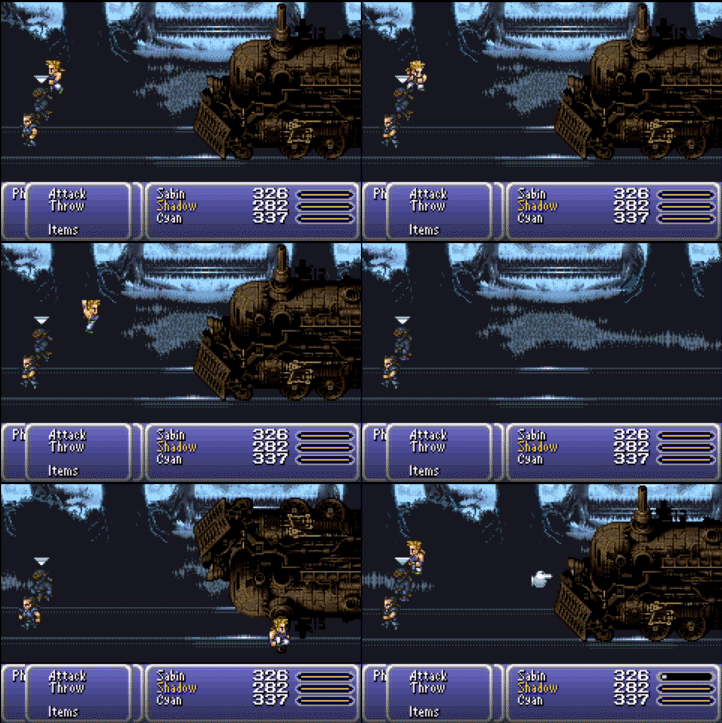
Sabin suplexing a train.
The only worse conditions would be "anywhere near Sabin."

So, ignoring the rubble and choking cloud of dust, Choquette ran over a mile without stopping and got the message to the approaching at literally the last possible second. His actions saved the lives of everyone on board the train, and the Canadian Pacific Railroad was so grateful they gave him...a kindly worded letter. And $25.
1898 Canadian dollar
CANADIAN.

You can see the results of the Frank Slide to this day:
Frank Slide Remains
That's mountain guts. That's what you're looking at. The guts of a mountain.

Holy shit.

Wednesday, January 8, 2014

Holy Shit, the Toba Catastrophe!


I believe we've established by now that supervolcanic eruptions would suck harder than the vacuum of space. In case you needed a little extra evidence of that, let's take a look at the eruption of the Lake Toba supervolcano. It happened around 70,000 years ago, and was terrifying.

The Toba Supervolcano Eruption may have been the single largest volcanic event in the known history of the planet. It spewed so much ash into the air that all of South Asia was covered with about six inches of it. Six inches of ash. Over an entire sub-continent. That's about 800 cubic kilometers of volcano vomit.
Volcano Vomit
Why, yes, I am an adult. Why do you ask?


Even bigger were the long term effects. All that ash and sulphur dioxide is not so great for the global climate, as it turns out. There is some debate on the issue, but it has been suggested that the Earth's most recent ice age was either ushered in by, or a direct result of the Toba Catastrophe. For six years after the eruption, the planet was consumed by a volcanic winter. The following 1,000 years were a period of global cooling.
Tauntaun
Which was just murder for the poor tauntauns


Right now, some of you are thinking, "Hey neat! A solution to global warming! Maybe a supervolcano eruption wouldn't be so bad after all!"

To you I say, "Nay." For there is a minor detail I left out before. Human beings were around before the Toba eruption. Afterward (or so goes the theory), we very, very nearly weren't. By some accounts, humanity sank into a genetic bottleneck in the aftermath of Toba. In fact, the human population of Earth may have dropped to around 10,000 people. By comparison, there are seven billion people today. That difference in population is literally too large to meaningfully display on a computer monitor.

10,000 is about one person per twenty square miles. It's not enough people to make up a city in some parts of the world. You'll find significantly more people per day in any one of the parks of Disney World than there were people in existence after the Toba Event.
Splash Mountain
And the rides in the apocalypse weren't nearly as fun.


Holy shit.

Wednesday, November 6, 2013

Holy Shit, the Svalbard Seed Vault!

It's seeds. In Svalbard.
One day, something terrible is going to happen to the Earth. I mean, the Earth will be alright. In most apocalyptic scenarios, the Earth will do just fine. That's not what people are really worried about when they say we need to save the planet.

No, what they mean is that we need to save ourselves. In a big ecological disaster, the crops we grow are going to become incredibly scarce. Maybe even extinct. That's problematic if you're a fan of eating. Even if you're strictly carnivorous, your food is not. I don't know why I feel the need to clarify this, but without crops, humanity is just...super dead.
Disco is Dead.
Deader.

Luckily, we have a contingency plan. Yeah. That's not just something from disaster movies. There is a very real, very functional contingency plan with an out-of-the-way, isolated, 11th hour savior station and everything. It's called the Svalbard Global Seed Vault, and it is aptly named.

Svalbard Seed Vault.
Because it's in Svalbard, is a global initiative, has seeds, and is a vault. It's that simple, yes.
Funded by various world governments and organizations like the Bill & Melinda Gates Foundation, the Svalbard Global Seed Vault is humanity's insurance policy. It's the destination for real life post-apocalyptic scientists/farmers who want to save the world.

I'm gonna be honest. I want to make fun of this concept. I want to make light of it. At first glance, it's so bizarre that this place exists. At second glance, it's even more bizarre that it has funding.

But you know what? I can't. It's goddamn terrific that we, as a species, are planning so far ahead as to stuff a bunch of biodiversity into nature's refrigerator. All I can do is share it and reassure you that, should you find yourself starving due to a meteor, nuclear war, or massive blight, there's a little beacon of hope in one of the coldest places on Earth.
Northern Lights in Svalbard
SUBTLE METAPHOR.

A place where you are legally required to carry a hunting rifle outside of towns so that you can defend yourself from polar bears, sure, but it's there. And one day, it may save the world.

And yes, I'm serious about the polar bear gun thing.

Holy shit.

Wednesday, September 25, 2013

Holy Shit, The Great Mississippi Flood!

1927 Flood in New Iberia

Remember when Katrina hit New Orleans, and everyone talked about how it was the biggest natural, social, economic, and political disaster to ever be caused by the weather?

Well, it wasn't.

George Bush does not care about black people.
It didn't even end this guy's career.


That dubious honor belongs to the Great Mississippi Flood of 1927.

The Great Flood actually had its origins in 1926, when an unusually high volume of summer rain started testing the capacity of levees all along the Mississippi. By September, tributaries in Iowa and Kansas were ready to burst from their cages. By Christmas, the water level of the tributary Cumberland River had already reached 56.2 feet in Nashville, a record that still hasn't been topped.

2010 Nashville Flood
Not even during this monstrosity

Finally, in the Spring of 1927, the levees started to break in earnest. 27,000 square miles of land along the river was devastated by the ensuing floods. That's almost the size of South Carolina. The flood hit areas of Arkansas, Illinois, Kansas, Kentucky, Louisiana, Mississippi, Missouri, Oklahoma, Tennessee, and Texas.

The damage clocked in at over $400 million, and 246 people lost their lives. In some areas, the flooding carried the force and twice the water volume of Niagara Falls. At its widest extent, the Mississippi grew to a staggering 60 miles, which is more than twice the size of the freaking Amazon at its greatest extent. During the wet season.

1927 Mississippi Flood map
Take a close look at the map. It's big.


Politically speaking, the hardest hit area was New Orleans. State officials in Louisiana made some difficult and terrible decisions to protect the city. Decisions that involved literally blowing up nearby levees and intentionally flooding the Parishes of St. Bernard and Plaquemines. Then it got even messier.

Dynamiting the Caernarvon Levee
Helpful.


The people of St. Bernard and Plaquemines were understandably a little miffed about having their homes destroyed by elected officials. That annoyance would later turn to downright anger when it turned out that the effort was entirely unnecessary anyway, and New Orleans had already been spared. Natural breaches in other levees relieved pressure on the levees around New Orleans, so their involuntary sacrifice was in vain.

Then it gets even messier.

At the time, most citizens of St. Bernard and Plaquemines were focusing on the whole "not drowning" part of daily life rather than the "whose fault is this" part. The government was happy to help with that, so long as you were white. If you were black, you had to wait your turn. Then you had to spend some time in a refugee camp with the kind of hospitality you would expect from House Frey.

Walder Frey
Heh.


Then you would never, ever receive a dime of promised federal aid. And you'd be forced at gunpoint to rebuild levees. For some reason, "forced to work" and "not receiving a dime" sounds familiar in this context.

It was kind of shitty.

So the Republican Party sprang into action. They were in power at the time, and then Secretary of Commerce Herbert Hoover had his eye on the White House for 1928. By promising a major effort for reform and the introduction of civil rights legislation, he was able to keep the story somewhat sub rosa. After he was elected, he weaseled his way out of it and started the grand tradition of the Republican Party losing the black vote -- a tradition which continues to this day.


The aftermath of the flood in the black community is also considered one of the main catalysts for the Great Migration, which eventually saw over 6 million black people pack up their shit and get the hell out of Dixie. It was one of the biggest internal demographic shifts in U.S. History, and it was more or less caused by the rain.


Holy shit.